📌 Introduction
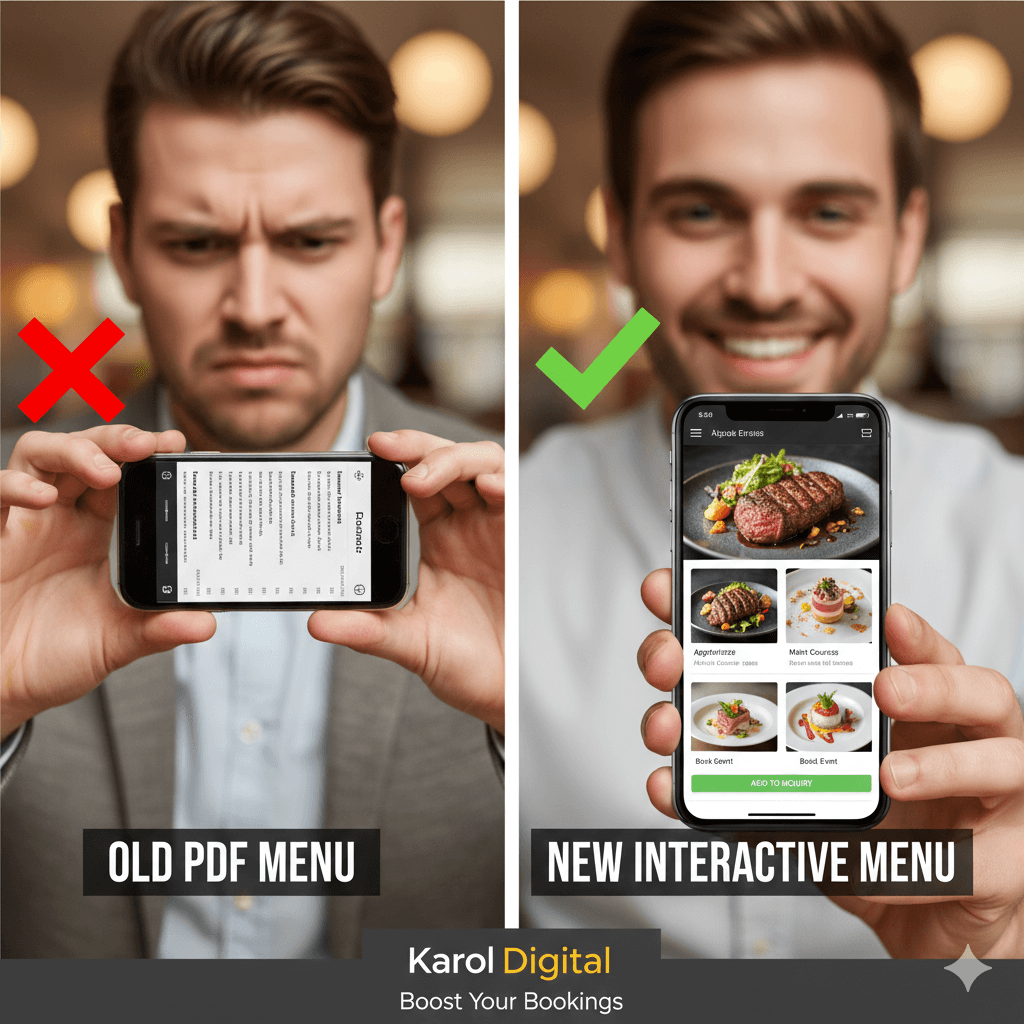
If your catering menu still lives in a PDF, you are asking hungry mobile customers to pinch, zoom, and hope. That friction kills impulse bookings.
Forward-looking food brands replace static files with high-performance interactive menus — and increasingly, custom ordering apps that keep regulars and corporate clients coming back.
🚀 Why PDFs Quietly Damage Catering Sales
PDFs create a poor mobile experience, hide content from search discovery, and break the path from interest to enquiry. Every menu update becomes a re-export chore.
- ✅ Poor mobile UX: customers abandon before seeing signature dishes
- ✅ Weak discoverability: search engines struggle with PDF content
- ✅ No conversion path: interest does not flow into enquiry or checkout
- ✅ Update pain: every change means re-exporting and re-uploading
- ✅ No retention layer: one-off browsers never become repeat bookers
💡 The Modern Catering Stack
Combine an interactive custom website menu experience with conversion-focused booking journeys and, where repeat demand exists, a bespoke mobile ordering app on a shared database.
1. Interactive website menus
Custom-built menu experiences load fast, look premium, and guide users toward quotes, tastings, or orders — engineered for conversion, not dropped into a generic theme.
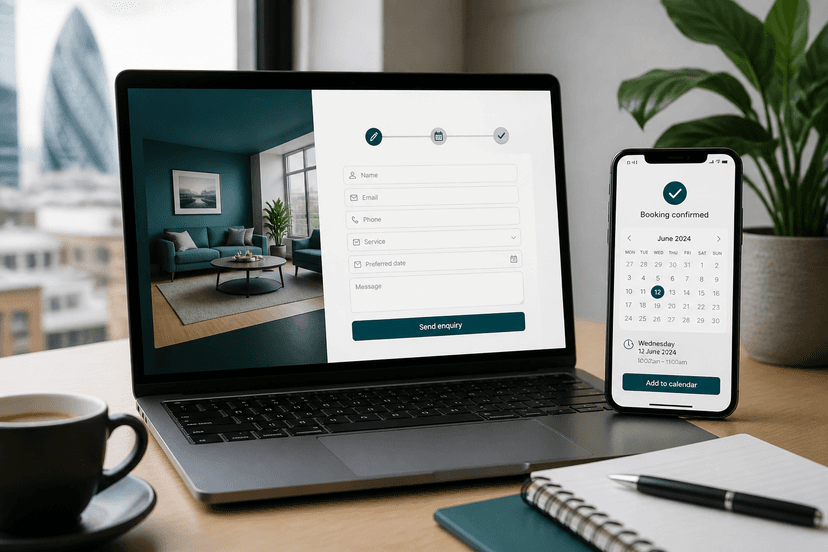
2. Conversion-focused booking journeys
Clear CTAs, packages, and trust signals help corporate and private clients act without calling during service.
3. Custom mobile applications
iOS & Android apps support repeat ordering, loyalty, event reminders, and saved preferences — especially valuable for corporate catering relationships.
🍽️ Designing Menus That Sell
Structure dishes and packages for scan reading. Highlight dietary clarity, lead times, and minimums. Use photography intentionally without crushing performance.
Every menu view should offer a next step: request a quote, start a booking, or save a package for later in the app.
- ✅ Readable on mobile without zooming
- ✅ Packages and dietary info structured clearly
- ✅ Enquiry path visible on key screens
🔄 Real-Time Sync Across Website and App
Update a seasonal dish once and it appears on your website and mobile app instantly when both share a unified database. Fewer mistakes. Fresher offers. Calmer operations.
- Fast marketing website with interactive menus
- Optional e-commerce or deposit checkout
- Custom mobile app for loyal and corporate clients
- Shared product and availability data everywhere
📱 Ordering Apps for Food Brands
A bespoke catering app is not about novelty. It is about making reorders effortless for the clients who already trust you.
- 🧾 Faster repeat corporate orders
- ⭐ Loyalty and preferred menus
- 🔔 Event reminders and cut-off alerts
- ⚡ Incredibly fast, secure mobile performance
If PDFs are currently your menu system, fix the website journey first — then extend into app retention.
🛠️ Recommended Delivery Process
A clear process keeps ambitious small businesses focused on outcomes — not technical distractions. Here is a practical sequence we recommend when investing in high-performance custom systems.
- Discover goals, audience, and conversion definition of success
- Map information architecture and customer journeys
- Design and engineer a high-performance custom foundation
- QA for speed, accessibility, security, and conversion paths
- Launch with content training and a measurement plan
✅ Action Checklist
- ✅ Menus readable on mobile without zooming
- ✅ Packages and dietary info structured clearly
- ✅ Enquiry or order path visible on every key screen
- ✅ Proof elements easy to scan
- ✅ A plan for retention beyond the first booking
❓ Frequently Asked Questions
Will this work for a small team?
Yes. We prioritise modern secure content systems and clear journeys so small teams can operate without a full-time developer for everyday updates.
Do you use templates?
No. Karol Digital engineers 100% custom digital assets without template bloat — focused on speed, security, and conversion.
Can website, store, and app stay in sync?
Yes. With a unified database approach, updates to products, services, or bookings can appear across channels in real time.
🎯 Key Takeaways
Premium growth comes from modern, fast, high-quality digital systems engineered around real customer journeys. Template shortcuts create short-term comfort and long-term friction. Custom websites, conversion-focused e-commerce modules, and bespoke mobile applications create an ecosystem your team can run with confidence.
- ⚡ Prioritise lightning-fast performance as a conversion feature
- 🔒 Prefer rock-solid custom foundations over fragile plugin stacks
- 📈 Design every key page with one commercial job
When you evaluate partners, ask how they will protect performance as content grows, how content editors will work day to day, and how future e-commerce or mobile application layers will connect to the same source of truth. Those questions separate premium custom engineering from short-term template projects.
- 📱 Plan for retention with apps that sync to your website and store
- 🧩 Keep one unified database so customers never see conflicting information
🚀 Ready to Move Forward with Karol Digital?
Karol Digital partners with ambitious small businesses as a high-performance technical partner — building 100% custom websites, conversion-focused e-commerce platforms, and custom mobile applications (iOS & Android) without template bloat.
If you want clarity before you invest, start with a Website Performance & Growth Audit. If you already know you need a premium system, book a consultation and we will scope interactive menus and a catering mobile app with a clear fixed quote before any build starts.
👉 Next step: Explore our services and pricing pages, or contact us to request a custom project quote. Bespoke strategies. High-quality engineering outcomes.