📌 Introduction
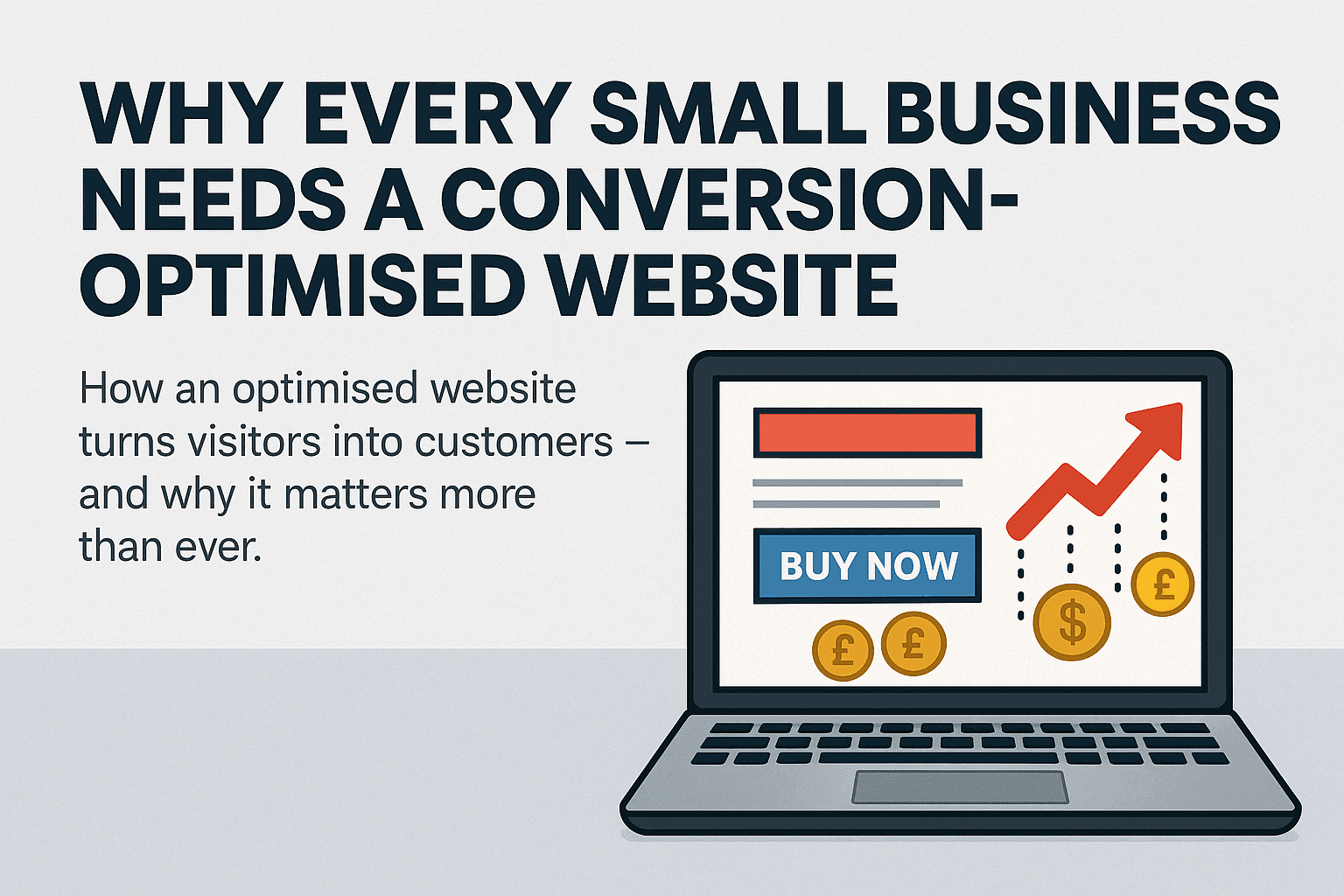
Traffic without conversion is expensive noise. Conversion-focused digital systems turn attention into enquiries, sales, and repeat business.
Small businesses engineer that outcome across websites, stores, and mobile apps — not with random tweaks, but with intentional custom design.
🚀 What Conversion Optimisation Really Means
It is not about manipulative tricks. It is about making the next useful action obvious — book, buy, call, or message — with trust and speed supporting the decision.
- ✅ Vague propositions: visitors cannot see themselves in the offer
- ✅ Friction-heavy forms: motivated users quit
- ✅ Proof placed too late: doubt wins
- ✅ Weak mobile journeys: desktop-only thinking leaks revenue
- ✅ Disconnected retention: first conversion never becomes a second
💡 System Thinking Beats Page Tweaks
Optimise the website layer, commerce layer, and app layer as one journey sharing data and messaging.
1. Website layer
Service and product pages answer questions and guide action. Custom structure beats template sections that exist only because a theme included them.
2. E-commerce layer
Secure payments, fast browsing, and reassurance at checkout define conversion-focused stores.
3. App layer
Bespoke mobile apps improve retention after the first conversion while sharing a unified database with site and store.
📏 Measurement That Matters
Watch enquiry rate and lead quality, checkout completion, app return usage, and performance metrics tied to bounce. Optimise the constrained step in the journey.
- 📈 Enquiry rate and lead quality
- 🛒 Checkout completion
- 📱 Return usage inside an app
- ⚡ Performance tied to conversion
🔁 Iteration Without Plugin Pain
Custom foundations make it easier to test messaging and journeys without fighting theme limitations. That speed of learning is a competitive advantage.
🛠️ Recommended Delivery Process
A clear process keeps ambitious small businesses focused on outcomes — not technical distractions. Here is a practical sequence we recommend when investing in high-performance custom systems.
- Discover goals, audience, and conversion definition of success
- Map information architecture and customer journeys
- Design and engineer a high-performance custom foundation
- QA for speed, accessibility, security, and conversion paths
- Launch with content training and a measurement plan
✅ Action Checklist
- ✅ Clarify commercial outcomes before design begins
- ✅ Prioritise lightning-fast mobile performance
- ✅ Prefer custom foundations over fragile template stacks
- ✅ Plan for e-commerce or app expansion on one database
- ✅ Measure conversion quality after launch — not vanity traffic alone
❓ Frequently Asked Questions
Will this work for a small team?
Yes. We prioritise modern secure content systems and clear journeys so small teams can operate without a full-time developer for everyday updates.
Do you use templates?
No. Karol Digital engineers 100% custom digital assets without template bloat — focused on speed, security, and conversion.
Can website, store, and app stay in sync?
Yes. With a unified database approach, updates to products, services, or bookings can appear across channels in real time.
🎯 Key Takeaways
Premium growth comes from modern, fast, high-quality digital systems engineered around real customer journeys. Template shortcuts create short-term comfort and long-term friction. Custom websites, conversion-focused e-commerce modules, and bespoke mobile applications create an ecosystem your team can run with confidence.
- ⚡ Prioritise lightning-fast performance as a conversion feature
- 🔒 Prefer rock-solid custom foundations over fragile plugin stacks
- 📈 Design every key page with one commercial job
When you evaluate partners, ask how they will protect performance as content grows, how content editors will work day to day, and how future e-commerce or mobile application layers will connect to the same source of truth. Those questions separate premium custom engineering from short-term template projects.
Also document success metrics before design begins: qualified enquiry volume, booking completion, checkout rate, or repeat purchase frequency. High-performance digital systems should be judged by commercial clarity — not by how many decorative sections appear on a page.
Finally, plan governance: who updates services, who approves proof points, and how often you review analytics. A modern platform stays valuable when your team can operate it confidently, securely, and consistently across website, store, and app experiences.
For why every small business needs a conversion optimised website 2025 guide, the strategic theme remains consistent: invest in custom, conversion-focused infrastructure that compounds trust. Karol Digital helps small businesses do exactly that with clear scoping, fixed quotes, and engineering standards built for long-term growth.
When you evaluate partners, ask how they will protect performance as content grows, how content editors will work day to day, and how future e-commerce or mobile application layers will connect to the same source of truth. Those questions separate premium custom engineering from short-term template projects.
- 📱 Plan for retention with apps that sync to your website and store
- 🧩 Keep one unified database so customers never see conflicting information
🚀 Ready to Move Forward with Karol Digital?
Karol Digital partners with ambitious small businesses as a high-performance technical partner — building 100% custom websites, conversion-focused e-commerce platforms, and custom mobile applications (iOS & Android) without template bloat.
If you want clarity before you invest, start with a Website Performance & Growth Audit. If you already know you need a premium system, book a consultation and we will scope a conversion-focused web and app system with a clear fixed quote before any build starts.
👉 Next step: Explore our services and pricing pages, or contact us to request a custom project quote. Bespoke strategies. High-quality engineering outcomes.